USFRA helped to lift the voice of farmers and ranchers last week on the world’s most visible stages—Climate Week NYC and the World Economic Forum’s (WEF) Sustainable Development Impact Meetings, held alongside the United Nations General Assembly.
In this issue, you will learn more about a two-day event that USFRA co-hosted, “Farmers, Our Food and Our Future,” an interactive, multi-stakeholder gathering designed to generate actionable priorities for agriculture ahead of COP30 in Brazil later this year.
In addition, USFRA was invited to participate in WEF’s meetings, where more than 1,000 global leaders—including 500 business executives, 70 senior government officials, and 22 heads of international organizations—came together to align on priorities. WEF facilitates dialogue and action-oriented initiatives to improve the world through public-private cooperation. You will be hearing more soon about a new collaboration USFRA is involved in, featuring a breakthrough financial model that helps row crop farmers benefit from adopting regenerative agriculture practices.
By actively engaging and participating in global forums like these, farmers and ranchers are being increasingly recognized for their important role in helping solve some of the world’s greatest challenges.
Thank you for your continued support.
Kevin Burkum
CEO
U.S. Farmers & Ranchers in Action

USFRA’s board of directors is a group of leaders who not only guide the organization but also embody the spirit and innovation of American agriculture. They bring expertise, passion, and a collaborative spirit that drives USFRA forward.
In this video, Julie Fussner, chief executive officer of Culver’s, explains how she and USFRA help educate and inform key stakeholders about agriculture.
Farmers and ranchers were front and center during last week’s Climate Week NYC, one of the largest climate gatherings in the world.
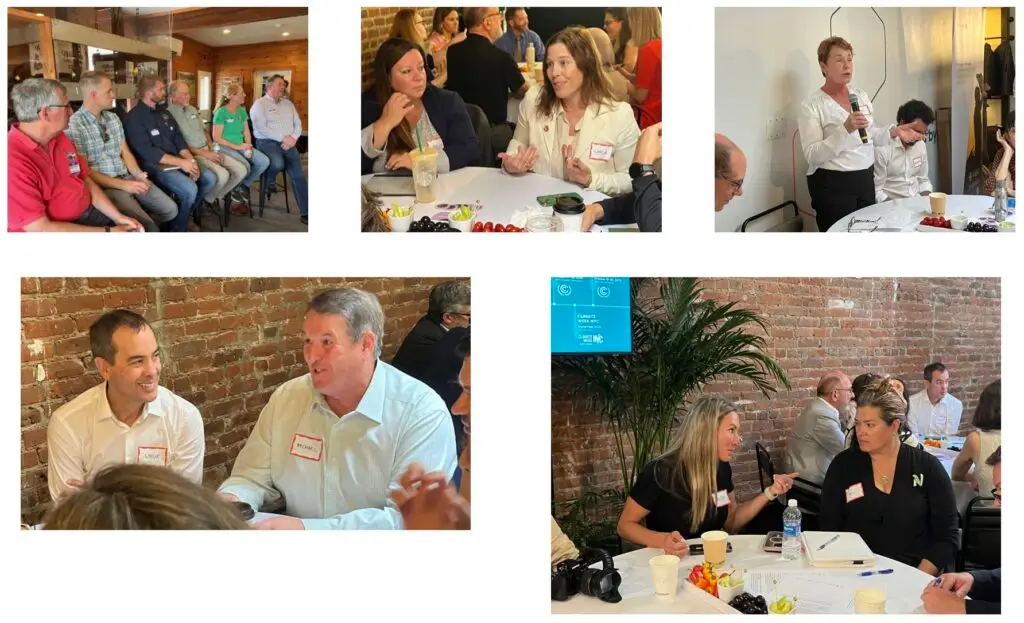
USFRA co-hosted an interactive, multi-stakeholder event, “Farmers, Our Food and Our Future.” The two-day event focused on actionable and practical priorities for the United Nations Climate Change Conference (COP30 Brazil) later this year.
USFRA partnered with Bayer, HowGood, Clim-Eat, 4SD Foundation, Cornell Hudson Valley Research Laboratory, and the WBCSD – World Business Council for Sustainable Development, which began with a farm visit to Hudson Valley on Sept. 21, and concluded with roundtable discussions in New York City on Sept. 24.
At the farm, USFRA CEO Kevin Burkum moderated a farmer panel discussion featuring USFRA Chair Michael Crinion and area farmers to discuss their perspectives, which were then further discussed during roundtable discussions. A report will be developed to summarize key points that will help ensure emerging propositions are grounded in reality, with farmers at the center.
Special thanks to the farmers who took time away from harvest to share their perspectives, including Carla Schultz of United Soybean Board, Mary Kraft of Dairy Management Inc., and Alice Crothers.
Two leading ag organizations, the Minnesota Corn Research & Promotion Council (MCR&PC), a grower-led checkoff, and the American Pecan Promotion Board (APPB), the national checkoff for the U.S. pecan industry, have joined USFRA’s network of ag industry leaders.
Established in 1990, MCR&PC works to elevate corn demand through promotion, research and industry development. Its mission is to identify opportunities for corn farmers, expand corn markets, promote efficient and environmentally sound production, and help increase understanding of the value of corn to the national economy.
APPB, founded in 2021, is comprised of pecan producers and importers. Many pecan producers integrate row crops, livestock and other value-added products into their operations. For instance, in the southern U.S., pecan orchards are often part of a mixed farming operation with soybeans, peaches or cattle.
Welcome, MCR&PC and APPB!

The fifth webinar in USFRA’s series on advancing farmer profitability and resilience while reducing greenhouse gas emissions will explore the challenges and opportunities of closing the row crop yield gap. It will take place on Wednesday, Oct. 29, from 2 to 3:30 p.m. CT.
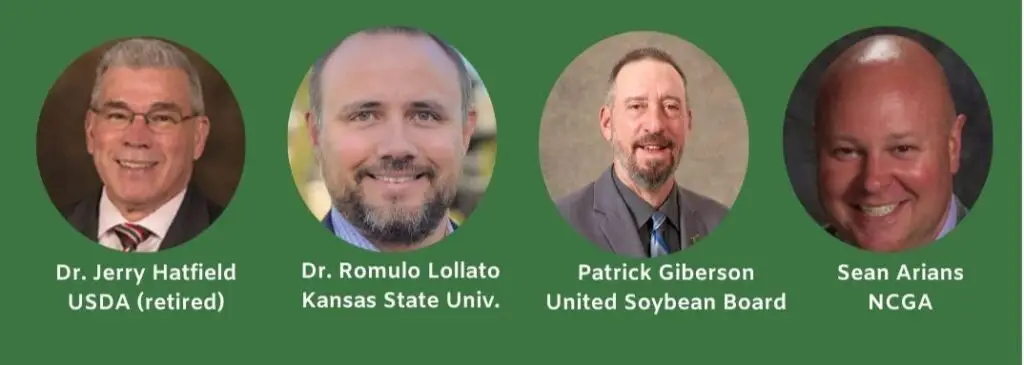
Speakers include Dr. Jerry Hatfield, retired at the USDA Agricultural Research Service, Dr. Romulo Lollato of Kansas State University, Patrick Giberson, farmer and member of the United Soybean Board and USFRA Board of Directors and Sean Arians, National Corn Growers Association.
USFRA launched the five-part webinar series in April, focusing on the key findings from USFRA’s peer-reviewed report, “Potential for U.S. Agriculture to Be Greenhouse Gas Negative,” which was published late last year.
If you’ve missed any of the four previous webinars, you’re able to view them online:
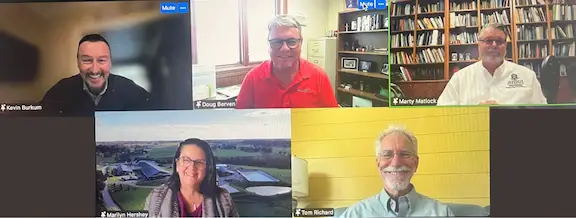
On Sept. 9, USFRA hosted the fourth webinar in its five-part series, focusing on energy and energy-use efficiency. As outlined in USFRA’s report “Potential for U.S. Agriculture to Be Greenhouse Gas Negative,” improving energy efficiency presents a powerful opportunity for agriculture to cut its carbon footprint while boosting farm profitability and resilience.
Dr. Tom Richard of the Global Council for Science and the Environment (GCSE) and Dr. Marty Matlock of the University of Arkansas opened the session with strategies for achieving carbon-negative agriculture. Their recommendations included harnessing the power of photosynthesis, replacing fossil fuels with on-farm and agriculturally based energy production, and advancing carbon capture and storage solutions.
Doug Berven of POET—the world’s largest biofuel producer—outlined the energy transition he believes is essential to keep agriculture profitable. He emphasized the potential for farmers to meet their energy needs using resources from the surface of the land, rather than relying on fossil fuels deep underground.
Adding a farmer’s perspective, Marilyn Hershey, Chair of Dairy Management Inc. and a Pennsylvania dairy farmer, described her family’s experience with on-farm energy innovation, including the installation of a methane digester that turns waste into renewable energy.
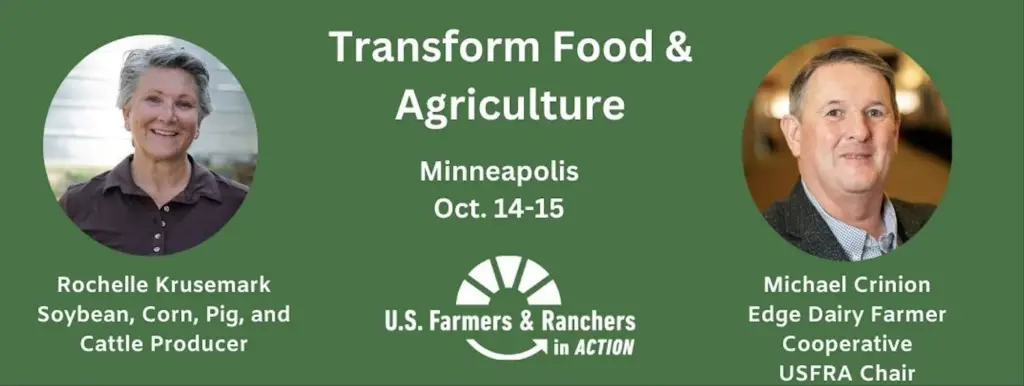
USFRA is hosting a fireside chat at the upcoming Transform Food & Agriculture national conference, taking place on October 14-15 in Minneapolis. USFRA Chair Michael Crinion, a dairy farmer from South Dakota and board member of Edge Dairy Farmer Cooperative, and Rochelle Krusemark, a soybean, corn, pig and beef cattle producer and board member of the Minnesota Soybean Research and Promotion Council, will be discussing how farmers and ranchers are navigating economic, environmental, and technological pressures to improve long-term resilience. The panel will be moderated by USFRA CEO Kevin Burkum.
USFRA’s podcast, Farm+Food+Facts, draws thousands of listeners and is recognized as one of the top podcasts that explore sustainable food systems. This month’s episodes:
Dawn Caldwell, executive director of Renewable Fuels Nebraska, joins Food+Farm+Facts to discuss the U.S. ethanol industry, E15, the “Golden Nebraska Triangle,” export markets and more. Listen HERE.
In a Podcast Extra, Caldwell discussed the benefits of Nebraska carbon dioxide pipelines. Listen HERE.
Don’t forget to subscribe and tune in to Farm+Food+Facts!
Oct. 14-15: Transform Food & Agriculture USA 2025
Nov. 10-21: United Nations Climate Change Conference (COP30)